Malay Apple: Known to Grenadians as “Cashew” or “French Cashew”
When most visitors hear the word “cashew” in Grenada, they immediately think of the famous cashew nut. To their surprise, Grenadians are often referring to an entirely different fruit. The Malay Apple (Syzygium malaccense), known locally as French Cashew or simply Cashew, is one of the island’s most colorful, refreshing, and underrated tropical fruits. With its glossy red skin, crisp white flesh, and incredibly high water content, the French Cashew is a favorite childhood snack for many Grenadians and a seasonal treat that visitors often discover by accident.
Although it may not receive the same international attention as Grenada’s mangoes, nutmeg, cocoa, or soursop, the French Cashew has long been part of the island’s agricultural and cultural landscape. During the fruiting season, large trees loaded with bright red fruit can be seen in backyards, gardens, village roadsides, and farms throughout Grenada. For many locals, spotting a ripe French Cashew tree instantly brings back memories of climbing branches as children, gathering fallen fruit from the ground, and sharing freshly picked cashews with family and friends.
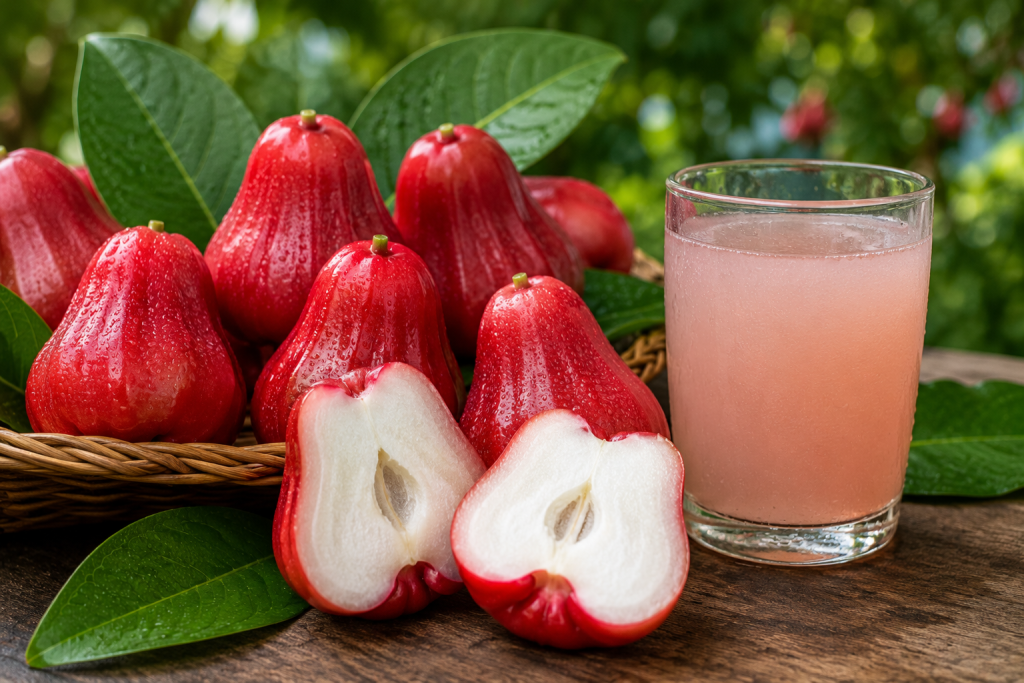
What Is a Malay Apple?
The Malay Apple is a tropical fruit belonging to the myrtle family and is native to the Indo-Malayan region of Southeast Asia. Over centuries of trade and migration, the tree spread throughout the tropical world, eventually reaching the Caribbean, Central America, South America, and parts of Africa.
Today, it is known by many names depending on the country. In Grenada, it is commonly called French Cashew or Cashew. Elsewhere throughout the Caribbean, it may be known as Pomerac, Pommerac, Otaheite Apple, Mountain Apple, Rose Apple, Malay Rose Apple, Jamaican Apple, or Pink Satin Ash.
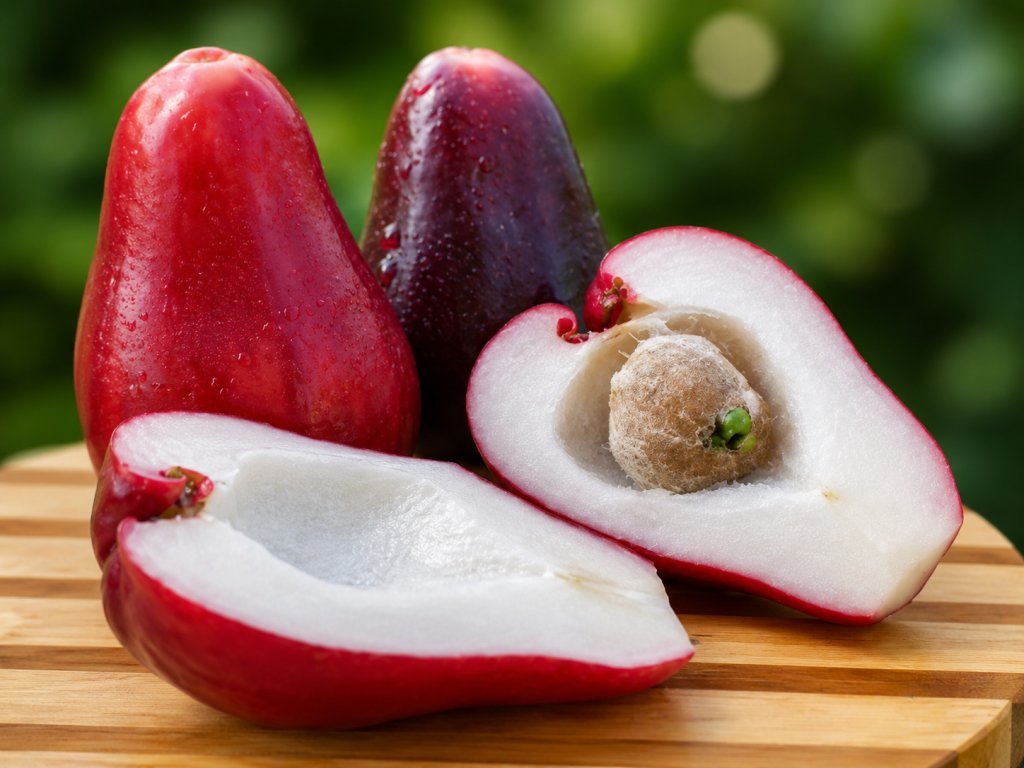
The fruit itself is unmistakable. It has a pear-shaped or bell-shaped appearance with smooth, glossy skin ranging from bright red to deep crimson or reddish-purple. Inside, the flesh is snow-white, crisp, juicy, and surrounds a single large seed.
Why Grenadians Love French Cashew
One reason the French Cashew remains so popular in Grenada is its refreshing nature. Unlike heavier tropical fruits such as mangoes, breadfruit, or avocado, French Cashew is incredibly light and hydrating. In fact, studies have shown that the fruit contains approximately 90 to 92 percent water, making it one of the most water-rich fruits grown in the tropics.
Its flavor is often described as a combination of pear, watermelon, rose water, and apple. The taste is mild, slightly sweet, and exceptionally refreshing, especially when chilled. Many Grenadians enjoy eating the fruit fresh from the tree, while others sprinkle it with a little salt or use it to prepare local snacks and preserves.
For visitors unfamiliar with the fruit, the first bite is often surprising. The texture is crisp like a pear, but much juicier, with a subtle floral flavor that is unlike almost any fruit found in North America or Europe.
The Beautiful Cashew Tree
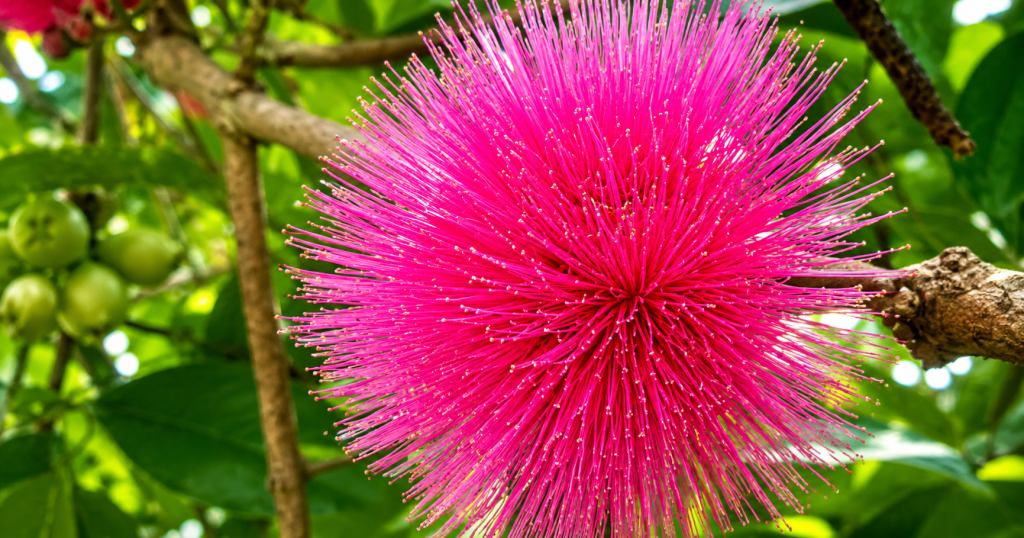
The French Cashew tree is considered one of the most beautiful fruit trees found in Grenada. Mature trees can grow over 50 feet tall and produce stunning clusters of pink and crimson flowers before fruiting. The flowers themselves are highly ornamental, attracting bees, birds, and other pollinators.
When the fruit begins to ripen, the tree becomes covered in brilliant red fruit that glistens in the tropical sunlight. The sight of a mature French Cashew tree in full production is one of the most beautiful displays in a Caribbean garden.
At Mt. Parnassus Inn, guests are fortunate enough to see a French Cashew tree growing right on the property. During the fruiting season, visitors often have the opportunity to see the fruit hanging from the branches and experience one of Grenada’s lesser-known tropical treasures firsthand.
Health Benefits of French Cashew
The French Cashew is more than just a delicious snack. It is packed with nutrients and has been valued in traditional medicine across many tropical cultures.
Excellent for Hydration
Because the fruit contains over 90 percent water, it helps replenish fluids lost through sweating and heat exposure. This makes it particularly refreshing during Grenada’s warmer months.
Rich in Vitamin C
French Cashew contains Vitamin C, which supports the immune system, promotes healthy skin, and assists the body in fighting infections.
Supports Digestive Health
The fruit contains dietary fiber, which may help support healthy digestion and reduce constipation.
May Help Regulate Blood Pressure
Research suggests the fruit contains compounds such as epicatechin, which may contribute to healthy circulation and blood pressure management.
Supports Eye Health
Vitamin A present in the fruit helps maintain healthy vision and eye function.
Natural Detoxification
The combination of water, vitamins, minerals, and antioxidants helps support the body’s natural detoxification processes.
Traditional Medicinal Uses
Throughout the tropical world, various parts of the Malay Apple tree have been used in traditional remedies.
In some regions:
- Dried leaf powder is used for cracked tongues.
- Root preparations have been used to alleviate itching and swelling.
- Leaves, roots, and seeds have been used in traditional fever remedies.
- Various parts of the tree have been used to address coughs, headaches, digestive issues, and other ailments.
While many of these uses come from traditional practices rather than modern clinical research, they demonstrate the important role the tree has played in local cultures for centuries.
How Grenadians Eat French Cashew
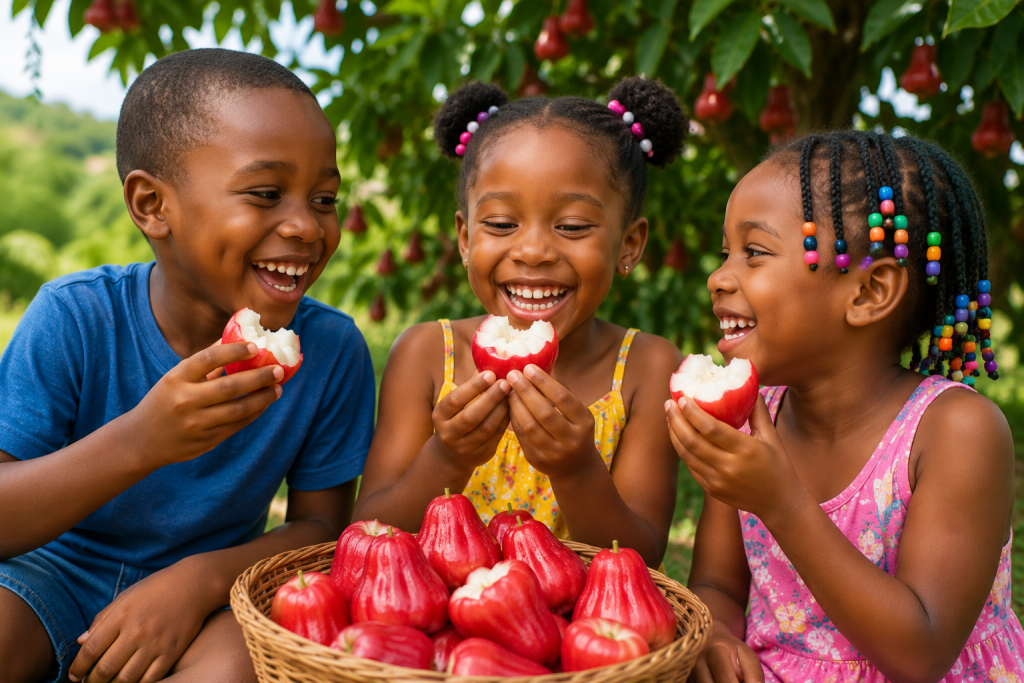
The simplest and most popular way to enjoy French Cashew is straight from the tree. The thin skin is edible, and the flesh can be eaten fresh after removing the seed.
Grenadians also use French Cashew in a variety of ways:
- Fresh fruit snacks
- Fruit salads
- Homemade jams
- Preserves
- Jellies
- Fruit juices
- Wines
- Chow (pickled with salt, garlic, and peppers)
- Salsas
- Desserts
Slightly underripe fruit is often used for pickling and preserves, while fully ripe fruit is preferred for fresh eating and beverages.
Even the young leaves and shoots are consumed in some parts of the world, either raw or cooked as greens.
When Is French Cashew Season in Grenada?
French Cashew is highly seasonal in Grenada. The primary fruiting season generally runs between February and June, although local weather conditions can affect the exact timing each year.
Because the fruit bruises easily and has a short shelf life, it is rarely exported and is seldom found in large supermarkets. This makes tasting French Cashew in Grenada a special experience that many visitors cannot replicate once they return home.
Where to Find French Cashew in Grenada
The best places to find French Cashew during the season include:
St. George’s Market Square
Local farmers and vendors often bring freshly harvested fruit to the market. Ask specifically for “French Cashew” as some vendors may not recognize the name Malay Apple.
Roadside Fruit Vendors
Throughout Grenada, roadside stands often sell small bags of fresh fruit during the season.
Village Gardens and Backyards
Many families have trees growing on private property and may share fruit with neighbors and visitors during abundant harvests.
Mt. Parnassus Inn
Guests staying at Mt. Parnassus Inn may have the opportunity to see one of these beautiful trees growing directly on the property and experience an authentic piece of Grenadian fruit culture.
A Fruit Worth Discovering
While mangoes often receive most of the attention from visitors to Grenada, the French Cashew deserves a place on every tropical fruit lover’s list. Beautiful to look at, refreshing to eat, and deeply connected to Grenadian culture, it offers a taste experience that cannot easily be found elsewhere.
Whether you discover it at a roadside stand, the St. George’s Market, or growing on a tree during your stay at Mt. Parnassus Inn, the French Cashew represents everything that makes Grenada special: natural beauty, agricultural heritage, and simple pleasures that leave lasting memories.
The next time someone in Grenada offers you a “cashew,” don’t expect a nut. Expect one of the Caribbean’s most refreshing and fascinating fruits.
Also known as
apple, cajuil, cashew, french cashew, kwachimelon, love apple, malaba, mali apple, otaheite apple, plimrose, plumrose, pomme d’armour, pomme d’eau, pumarosa, titi apple